
Naval Aeronautics in the Civil War: Naval-Associated Operations of Observation Balloon; Part 1
Thomas G. Hilt
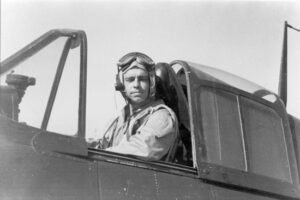
A young Lt. (jg.) Roberts in the cockpit of his aircraft. (Photo from the Naval Postgraduate School)
"Air Raid on Pearl Harbor – This Is No Drill"Â
On the morning of November 28, 1941, a U.S. Navy task
force consisting of the aircraft carrier USS Enterprise and
accompanying cruisers and destroyers left Pearl Harbor, Hawaii, to deliver
a squadron of 12 Marine Corps fighter planes to Wake Island, some 2,000
miles west of Pearl Harbor. The fighter planes were to reinforce the
garrison at Wake.
After landing aboard, the Marine fighters,
Grumman F4F Wildcats, had been taken from the flight deck to the hangar
deck below using the enormous airplane elevators of which the Enterprise
had three. The Wildcats were stored on the hangar deck for the trip to
Wake in order to leave the flight deck clear for the twice-daily
operations of the ship’s own air group. This air group flew out from its
shore base at Luke Field on Ford Island in Pearl Harbor and landed aboard
after the Marines had landed.
While the fighters of Fighting Squadron Six (also
F4F Wildcats), the Douglas SBD Dauntless of Bombing Squadron Six and
Scouting Squadron Six, and the Douglas TBD Devastator of Torpedo Squadron
Six were being tightly parked in takeoff position on the aft end of the
flight deck, inspected and refueled. The pilots of the squadrons gathered
in their respective ready rooms for a briefing on the fleet’s mission. I
was a pilot in Bombing Six with the rank of ensign.
For security reasons the nature of the mission
had not been revealed until the ship and its squadrons were at sea. The
air crews and the "ship’s company" soon learned that this was to be
no practice cruise. They learned further that for the first time all of
their planes were to carry ammunition for their machine guns, and that the
SBDs were to carry a 500-pound bomb on the routine twice-daily scouting
flights.
Vice Adm. William F. Halsey’s instructions were
"If you encounter any enemy (Japanese) ships or planes, you are to avoid
detection if possible, otherwise you are to attack." And this was peace
time! I did not take the threat of war seriously, having been through many
false alarms about imminent Japanese attacks during my preceding two years
at Pearl Harbor. Many others on the ship shared my skepticism.
On the cruise to Wake Island, we encountered no
"enemy," as I expected. We flew our morning and evening searches to
150 nautical miles ahead of the fleet, each section of two planes scouting
a 15-degree sector, and saw nothing. Two events of interest did occur. The
fleet crossed the International Date Line, causing us to lose one . . . .
This article costs $2.50 to download - or it's free for AAHS members.
Already a member? Sign in to download for free.