
Evolution of the Liaison-Type Airplane, 1917-1944: Part II
Capt. Irving B. Holley, Jr.
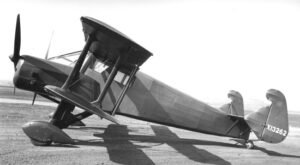
The Crouch-Bolas Dragon Fly was considered to fill the low and slow "courier-observation"  airplane requirement but was rejected by the U.S. Army Material Division. (Photo from the Peter M. Bowers collection)
Evolution of the Liaison-Type Airplane, 1917-1944: Part II
The history of the Air Corps interest in light airplanes dates back as early as 1929, when the Materiel Division conducted an extensive survey to determine the possibilities of using light commercial aircraft in lieu of existing specialized training equipment. Despite the fact that 40 manufacturers expressed an interest in the project, the division found only one model that was at all suitable. All others contained objectionable features, for the most part structural members that did not conform to Army-Navy material specifications. Taken collectively, the utter lack of standardization and interchangeability presented a most serious objection to the use of commercial aircraft for military use, and the division gave up the
idea.
One of the manufacturers of lightweight airplanes, the Taylor Aircraft Company, had no intention of abandoning the military market for training airplanes. Writing to the Assistant Secretary of War for Air late in 1931, Taylor pointed out that lightweight airplanes had dropped in average price from $5,000 to $3,500 between 1930 and 1931 and predicted that in another year the light airplane would be outselling all other types. Stressing the favorable economy of Cub airplanes selling at $1,325, Taylor urged the War Department to consider the Cub as a trainer, saying: "If some of these Army contracts were passed around to the manufacturers of light airplanes, it would greatly strengthen their
position."Â2
The Material Division had no interest in strengthening the position of light-airplane manufacturers, and brushed off the Taylor proposition with the remark that parachutes and heavy, winter flying equipment made the use of small airplanes impossible. Just why cadets in preliminary flying training should be wearing heavy flying clothing was not explained, but the division reply was emphatic, that the small airplane had no place in the Air Corps training
. . . . . .
This article costs $5.00 to download - or it's free for AAHS members.
Already a member? Sign in to download for free.