
Confession Corner: The Day I Killed the Dentist
Jon Goldenbaum
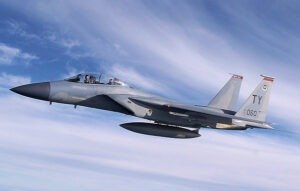
McDonnell Douglas F-15D, similar to the one the author was flying in this story. (Photo from the AAHS archives)
Confession Corner; The Day I Killed the Dentist
Tidewater Virginia in August is an uncomfortable place. The heat and humidity can be intolerable, particularly when wearing a long sleeve flight suit. However, wearing a sticky flight suit came with the best job I ever had: commander of a front-line F-15 Squadron. For two years, I was lucky enough to be the commander of the 71st Tactical Fighter Squadron at Langley AFB, Virginia. Langley is a beautiful place on the shores of the Chesapeake Bay, but in August most folks in Tidewater are looking for air conditioners and shade. For over 17 years I had worked my way from dumb wingman to flight lead, to instructor, to assistant ops officer, to ops officer in six different fighter squadrons at USAF bases all over the world. Finally I was one of few selected to command an F-15 squadron. I could not believe my luck – I was in heaven.
On this humid August day, I was more than busy, scheduled to fly an afternoon sortie with every minute of my morning filled with meetings. Why the meetings? Because in less than a week, I was to lead the squadron out to Nellis AFB in Las Vegas to participate in a Red Flag Exercise. Red Flag is a huge aerial exercise where military squadrons from all over the U.S and NATO simulate a full-scale air war. Nellis is the ideal place for this mass exercise, the empty desert lands of the Nellis Ranges north of Las Vegas contain huge expanses of restricted airspace where the military can operate at will without conflicting civilian traffic. Red Flag was started after the Viet Nam war by a new breed of Air Force planners who vowed to never make the mistakes of Viet Nam where politicians ran the war and aircrew were mired in red tape – unable to innovate or question. The intent of Red Flag was to season young aircrew in most realistic exercises, preparing them for an inevitable future war. Statistics proved that the vast majority of aircrew combat losses occurred in a first five missions. Therefore, the real goal of Red Flag was to give aircrew these first five missions in realistic simulations before they actually got to combat.
Thus my day was packed as it had been for the months leading up to our deployment. I started the day at seven in the morning with Chief Stallings, our Maintenance Supervisor. Stallings was a gruff, no-nonsense chief master sergeant, who had complete responsibility of our 24 F-15s, along with all the shops, tools, spares and most importantly the several hundred enlisted mechanics and technicians who kept them in the air. Sure, there were plenty of maintenance officers and even a few colonels in the outfit, but they mostly got in the way; the Chief ran the show. Over coffee, the Chief reviewed the problems and status of all the airplanes going on the trip and gave me his forecasts on how things would look at the end of the week when we actually went. After the Chief and I were through, my Ops Officer, “Grovel” Cooke, sat down with me to review the training status of the 30 pilots who would go.
In flying squadrons, there are a myriad of training events that each pilot has to perform to remain “mission ready.” Only mission ready pilots could go to a Red Flag, or for that matter, sit alert, or be considered a full-up, useful fighter pilot. These events could range from instrument currency to air refueling . . .
This article costs $2.50 to download - or it's free for AAHS members.
Already a member? Sign in to download for free.