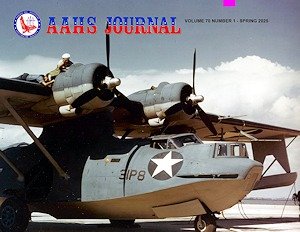
Two different PBY-5A Catalinas (N5593V and N5590V) played unique roles in the lives of two different (but related) persons’ name of “Thomas Kendall”. Thomas W. Kendall (Tom, the senior Kendall) was an engineer who specialized in process improvement practices in manufacturing long before ‘Kaizen’ became a standard business practice. Tom was innovative in marketing, using personal aircraft for speedier access to his clients when he began his own metal shop business. He and his son Thomas Robert Kendall (‘Bob’) both employed PBY-5A aircraft both for adventure and opportunity to improve the family’s fortunes. Their PBY-5A usages would become a defining feature for their lives in very different ways. Inge Kendall, (wife of Bob Kendall) a longtime member of AAHS, recently donated the PBY documentation collected by her family to the AAHS archives. This article recollections and research support from Sophia Hughes, were the result of this donation, and we thank her and the Kendall family for their support of aviation history
PBY-5A in Military Use
The PBY-5A, a variant of Consolidated Aircraft Company’s PBY Catalina seaplane, (a PBY-5 version with its hull and structure adapted for amphibian use), was a stalwart tool of WWII operations on several fronts by several countries’ military operations. The PBY-5As versatility made it suitable for several roles, namely for long range reconnaissance, airsea search and rescue, anti-submarine patrol, supply, cargo and troop transport, just to name a few. The PBY-5A variant was produced in the largest numbers (well over 1,000) of all PBYs for the U.S. and allied nations before and during WWII.[1]
PBY-5A BuNo. 48406 was delivered from Consolidated Aircraft’s San Diego factory on December 31, 1943, and served the U.S. Navy in the Pacific, patrolling the Marshall and Gilbert Islands and served with the U.S. Coast Guard following the war. Stricken from military service in 1956, the PBY-5A ended up in the U.S. Navy’s surplus storage at Litchfield Park, Arizona.[2] PBY-5A BuNo. 48397 also served with the U.S. Navy, and stored as surplus inventory in 1956 in Litchfield, Arizona, where it, and several other PBYs.
Thomas William Kendall- Early Years
Thomas “Tom” William Kendall was born March 18,1915, in Hollywood, the second of 4 children, to swim instructors Thomas “Pop” Harold Kendall and Fanny Giblin Kendall. Pop and Fanny taught swimming at the Venice Beach Swim Club, in Venice, California within a very large wooden structure. They had immigrated via Canada separately from southern England the couple then moved to the U.S. where they took jobs teaching swimming at the YMCA. Both parents taught at the Venice Beach Swim Club until the structure burned down in December 1920. Young Tom was a natural water baby; it was reported in a Los Angeles paper that he ‘amazed scientists’ by his ability to swim, labelling him ‘the World’s Youngest Swimmer’ by a Los Angeles newspaper.[3]
After the destructive fire, Pop Kendall moved his family to Upland, California and began a chicken/citrus ranch. Fanny and the children gradually took care of the chicken business while Pop became a salesman for the Upland firm, Scheu Mfg., selling citrus grove equipment and swamp coolers to growers in central and southern California, even driving his Model T to Arizona to equip the growers there. Young Tom Kendall attended Chaffey Union High School, participating on the swim team, the track team (he held a record in his senior year for the 440-yard dash), and the Physical Sciences Club. His interests in science turned problematic however; during an unsupervised . . .